
Making Sense in complex and uncertain times
Harvard Business Impact’s Top Business Challenges and Leadership Strategies for 2026 named sensemaking as the capability for these times. “Nearly 4 in 5 say that it will be very or extremely important for leaders to master sensemaking under uncertainty … in the next 3 - 5 years.”
The Institute for the Future had previously forecast in the Work Skills Report for 2020 and beyond that Sensemaking would be the #1 skill we’d need.
And they’re not wrong!
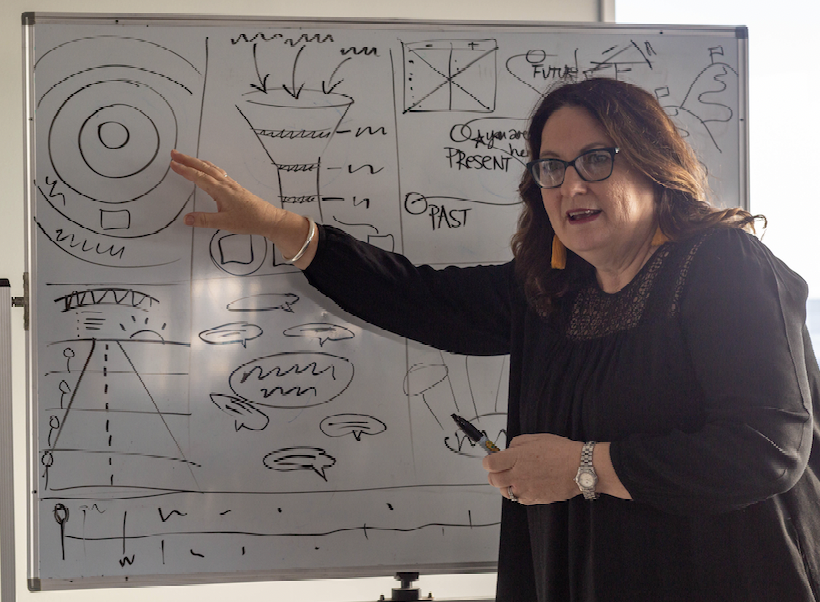
When there’s too much information, too many perspectives and no clear picture, sensemaking is the modern leadership capability that helps you work out what’s really going on, what it means, and then… what you can do about it.
conflicting signals
~
competing explanations
~
evidence vs interpretation
~
what do we know
~
where are the gaps
~
conflicting signals ~ competing explanations ~ evidence vs interpretation ~ what do we know ~ where are the gaps ~
What’s going on… and what do we need to do about it?
Most leaders and organisations want to know what to do about boosting their strategy and capability in Sensemaking.
The Assembly Method is Lynne Cazaly’s practical three-level approach to build modern capabilities in sensemaking:
Sensemaking 1.0 — Making sense of what you’re seeing … or not seeing
These are the foundations of sensemaking (which you may have missed out on the first time around - no problem, you can catch up): noticing, gathering and organising the fragments of information around you. Learn how to make thinking visible, map what you know, spot patterns and gaps, and move beyond simply collecting more information. What’s a hint, hunch, clue and pattern? What might they mean? What do I do with all of this information? How to handle your cognitive overload.
Sensemaking 2.0 — Making sense with others … colleagues, teams and groups
Complex and uncertain situations rarely come with a single perspective or explanation. Sensemaking 2.0 develops your ability to work with different viewpoints, competing interpretations, contradictions and emerging signals. It’s frequently about making sense together or having conversations, meetings and collaborations with others, about what’s going on and what we all think it means. Beware of rushing to an impatient or premature agreement or decision about what’s going on. How to participate in challenging conversations, lead sensemaking and stay alert.
Sensemaking 3.0 — Making sense with new types of information … AI (and its slop)
AI certainly changes the speed, scale and possibilities of sensemaking. Sensemaking 3.0 explores how to use AI to extend your thinking, not just create more and more information. This includes: finding connections, testing interpretations, challenging assumptions and generating possibilities (while keeping human judgement at the centre!) How to handle AI slop, excessive amounts of information/reports/data/presentations, and which sensemaking to offload to AI and which to do with your own humanity.
Together, the three iterations take sensemaking from just making sense of an overload of information, to making sense with people, to making sense with the AI overload.
Sensemaking 2.0 3.0 acknowledges that the next 3 years towards 2030 will require a more dramatic shift in our capabilities; that newer skills in 2.0 and 3.0 are required now.
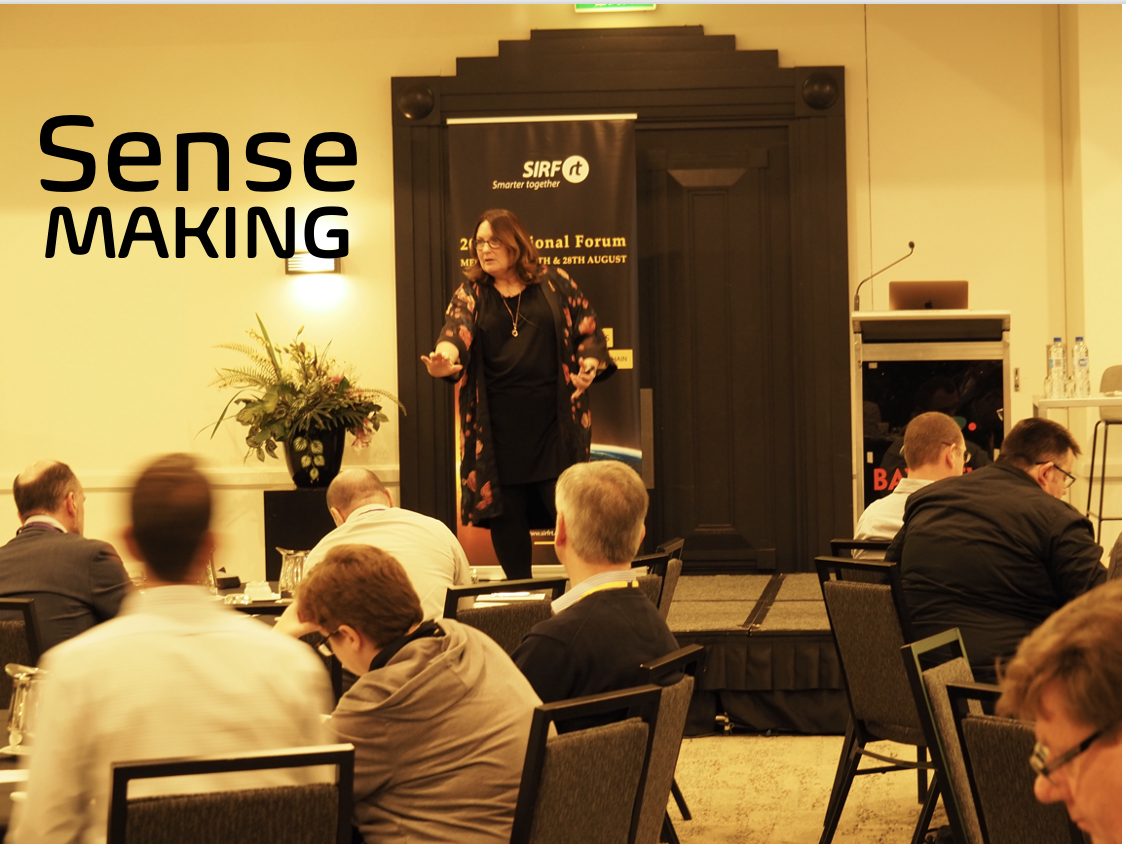
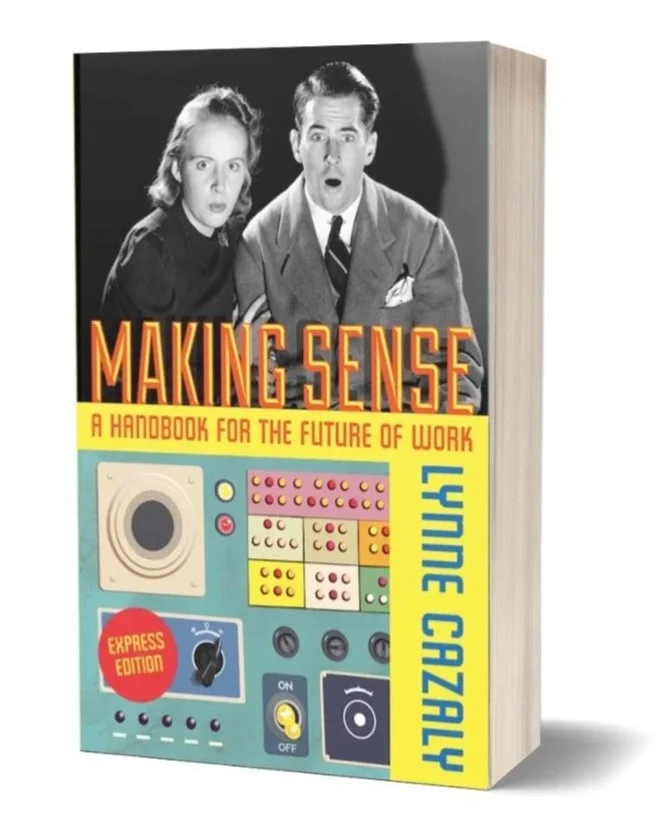
Lynne Cazaly’s book ‘Making Sense: A Handbook for the Future of Work’ began her interest, IP and strategic advice about making sense when the present - and future - is uncertain or complex.
Consider this as the Sensemaking 1.0 approach outlined above - how do we make sense of what we’re seeing?
Lynne’s IP, insights and expertise extend to Sensemaking 2.0, make sense with others (sometimes referred to as Collective Sensemaking and ideal for teams, executive and project offices), and now moves to 3.0, an obvious iteration of making sense with the enormity of information and progress made with/by humans and AI.

About Lynne Cazaly
Lynne Cazaly is an expert in new ways of thinking, leading and working.
At the level of the ‘emerging zeitgeist’, Lynne identifies early signals, patterns and shifts in thinking, translating them into valuable insights that help people make sense of what is changing and what it might mean.
Sensemaking has been a significant thread through Lynne’s work for more than a decade. She has written about it, taught it and developed programs that help people make sense of complexity through visual mapping, pattern recognition and practical sensemaking techniques. Her work is now evolving to explore how human judgement, visual thinking and AI can work together to accelerate sensemaking.
She is an international keynote speaker, CSP (Certified Speaking Professional) and author of 11 books, with her thinking published in Harvard Business Review, Forbes.com.au and many other media and business publications.
Lynne consults with leaders, teams and organisations, and is known for making complex ideas clear, practical and engaging. She is an exceptional keynote speaker, workshop trainer and group facilitator, drawing on years of radio broadcasting, group work and leadership.
Lynne has lectured in undergraduate and postgraduate programs with leading universities on advertising, marketing, influence, speaking, media, change and communications. She has held senior management roles across health, sport, arts, media, education and training, and government.
Her in-person and online sessions are known for being captivating, interactive, fresh and relevant, with practical ideas, skills and techniques people can apply immediately.
And yes, for the Australian-rules football fans, Lynne IS related to football legend Roy ‘Up there’ Cazaly!
